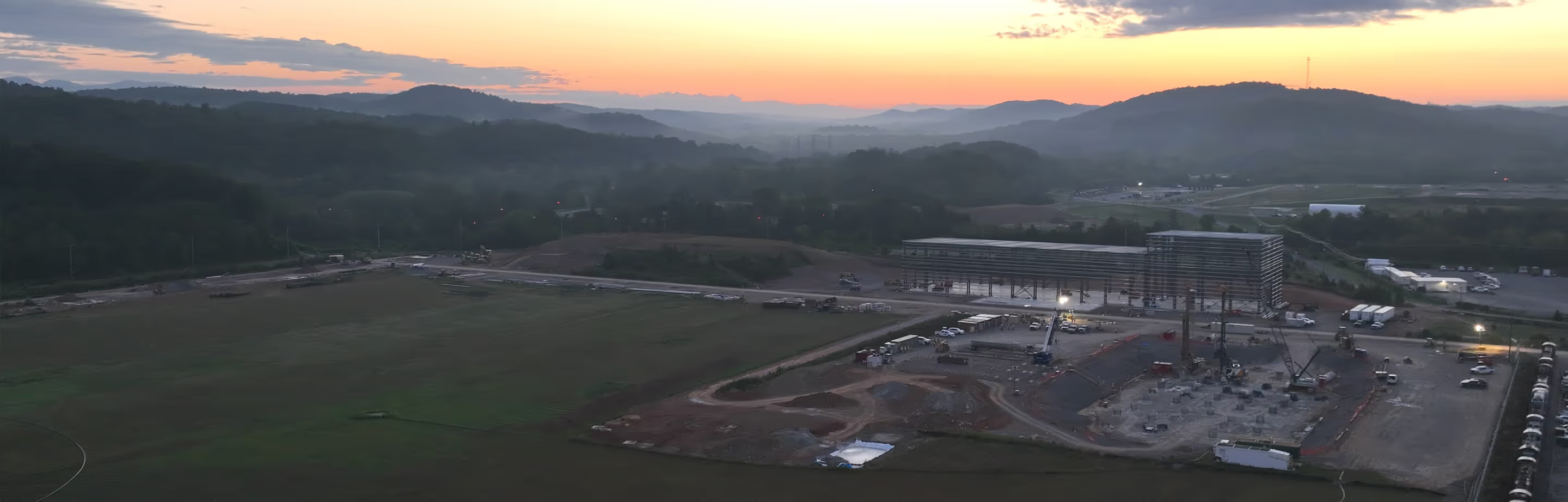
Baseball and Kairos Power Have This One Thing in Common
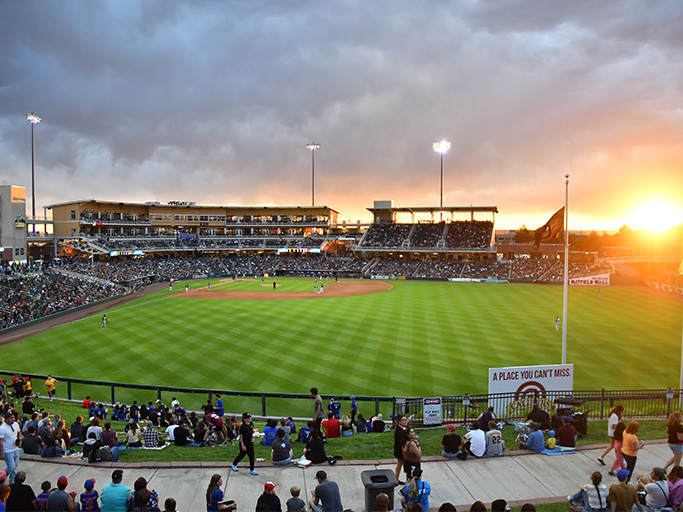

What do Major League Baseball and Kairos Power have in common?
They both take similar approaches to player and technology development.
While other professional sports like football and basketball typically see their top draft picks play right away, it could take several years before a top prospect reaches Major League Baseball.
That’s because each player starts in a team’s minor league farm system and develops over time through different levels of competition.
- Single-A focuses on foundational skills for recent and younger draft picks
- Double-A refines top prospect skills and evaluates players for Major League Baseball readiness.
- Triple-A fine-tunes performance for former pros and prospects who are nearly ready for the major leagues.

This iterative approach to player development has helped Major League Baseball teams fill out their rosters since the 1940s and ensures the readiness of players on the field.
It also serves as a testing ground for experimental rules and new ideas before they’re implemented in the major leagues to improve the overall game product.
A New Approach to Nuclear
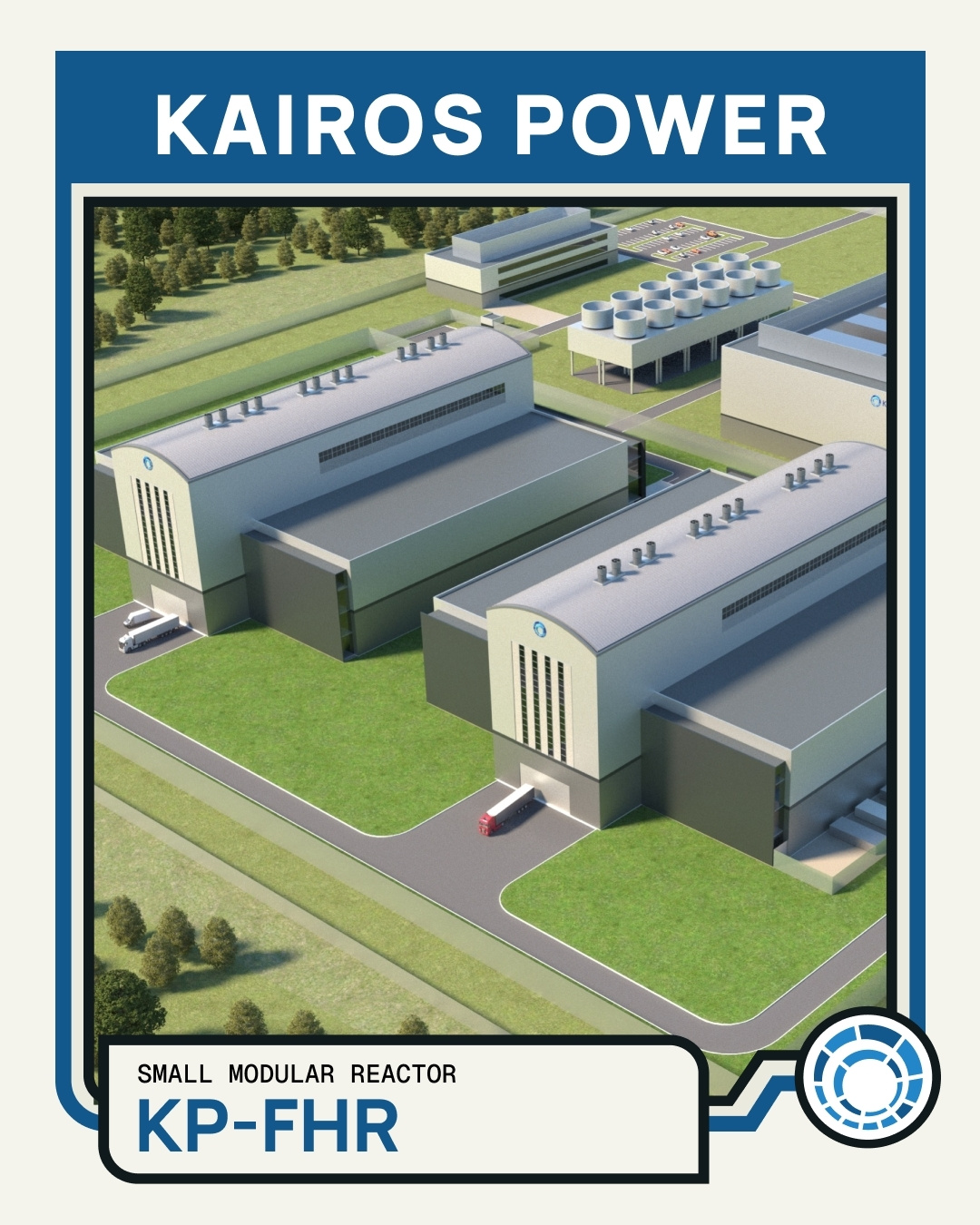
Since 2006, Kairos Power has gradually built up our own farm system of sorts to develop commercial advanced reactors. Our hybrid concept combines proven molten salt and pebble bed reactor technologies in a simplified, compact design to deliver affordable, carbon-free power. But before this reactor is ready for the major leagues (a.k.a. commercial deployment), we’re progressing our technology through a series of rapid iterative learning cycles to accelerate optimization while reducing the risks and uncertainties in building a nuclear power plant.
This approach hearkens back to the early days of nuclear energy development but has been replaced in recent years by a “design and build” model. Massive one-off projects have taken decades to complete and cost billions in overruns.
Instead of “swinging for the fences,” we’re taking a more disciplined approach through iterative reactor-scale hardware demonstrations, in-house manufacturing, rapid learning cycles, and proactive regulatory engagement to make meaningful progress on our technology.
This strategy helped us secure a landmark deal with Google to provide up to 500 megawatts of new nuclear capacity by 2035. It also led to the nation’s first power purchase agreement for an advanced reactor to supply reliable, carbon-free power to the Tennessee Valley Authority grid starting in the 2030s.
To meet these deadlines, we’re digging into the batter’s box and working the count to squeeze every ounce of learning from our farm system to ensure we can deliver our technology on schedule and with greater cost certainty.
Single-A: Engineering Test Units
Kairos Power is progressing through a series of non-nuclear reactor-scale, hardware demonstrations that will inform the design, construction, and operation of our Hermes Demonstration Reactor (Hermes 1) — the next phase of our farm system.
Each Engineering Test Unit (ETU) builds on the last to validate key systems, structures, and components in a less restrictive environment before introducing nuclear fuel into the reactor and scaling up operations.
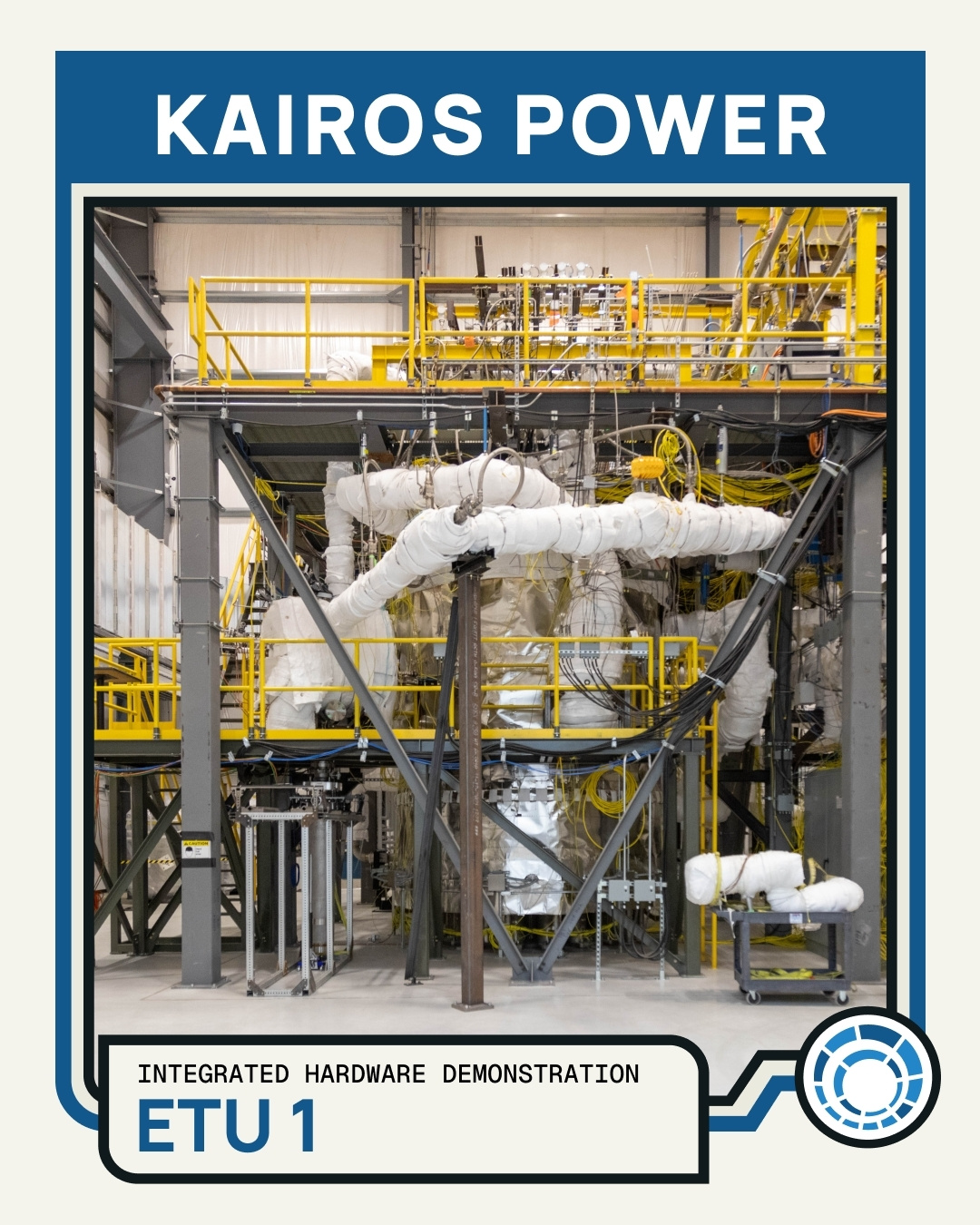
ETU 1 started operations in 2023 at our Manufacturing Development Campus in Albuquerque, New Mexico, which is also home to the aptly named Isotopes — the Triple-A affiliate of the Colorado Rockies. ETU 1 was the largest Flibe system ever built. It completed more than 2,000 hours of pumped salt operations and tested key systems, including salt loading, reactivity control, pebble handling, and chemistry control. It also tested our supply chain and directly influenced our vertical integration strategy to bring key manufacturing capabilities in-house. ETU 1 later retired after completing its mission. It was deactivated and decommissioned in 2024.
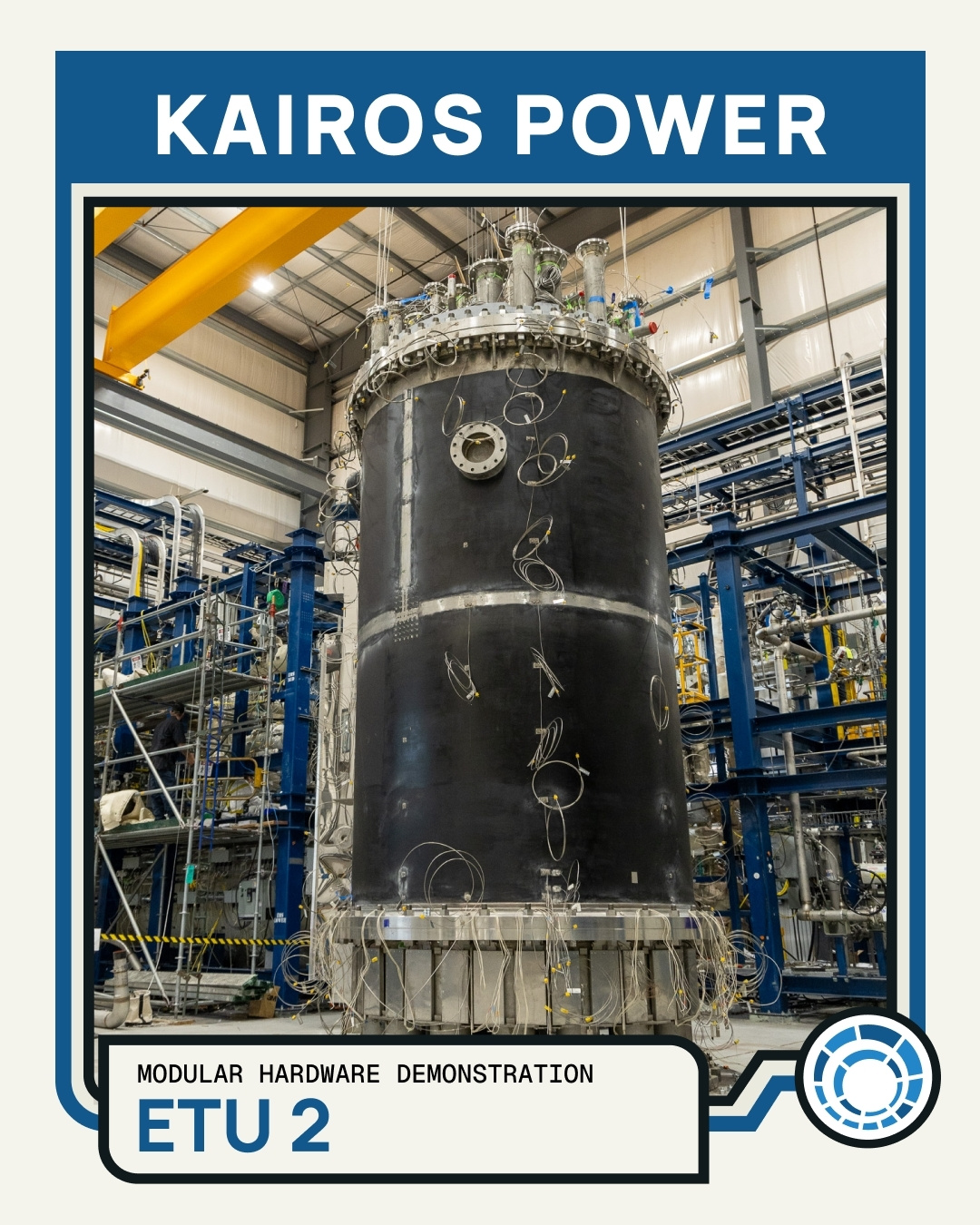
ETU 2 is “on deck” and under construction in Albuquerque. It’s being built in the same enclosure that housed ETU 1 and is our first modular system, comprising more than 30 plant equipment skids that will join together to form the integrated unit. It's helping us streamline the fabrication, assembly, and operations of modular reactor systems and also features the first U-stamped reactor vessel fabricated in-house. ETU 2 is expected to start operations later this summer.
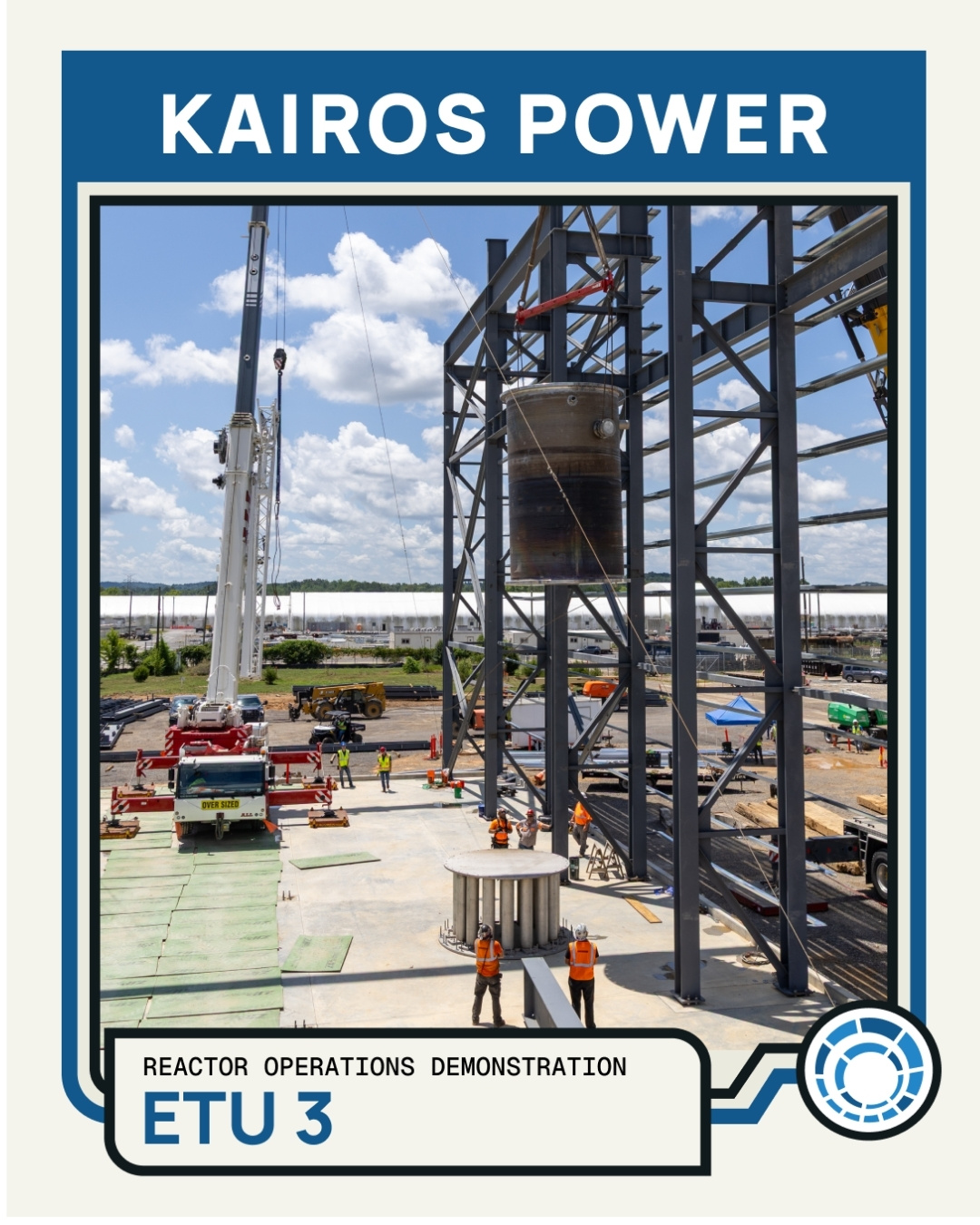
ETU 3 is under construction in Oak Ridge, Tennessee, and will help demonstrate our robotic remote-handling systems. This will be essential for the operation and maintenance of our reactors to increase their availability. It also takes the final steps in confirming how the safety-related equipment will be arranged around the Hermes reactor in a maintainable configuration. The building also served as a test bed for installing drilled piers at our Oak Ridge campus, which allowed us to fine-tune our construction processes for the Hermes 1 reactor building foundation. ETU 3 is expected to be completed this summer.
Double–A: Hermes 1
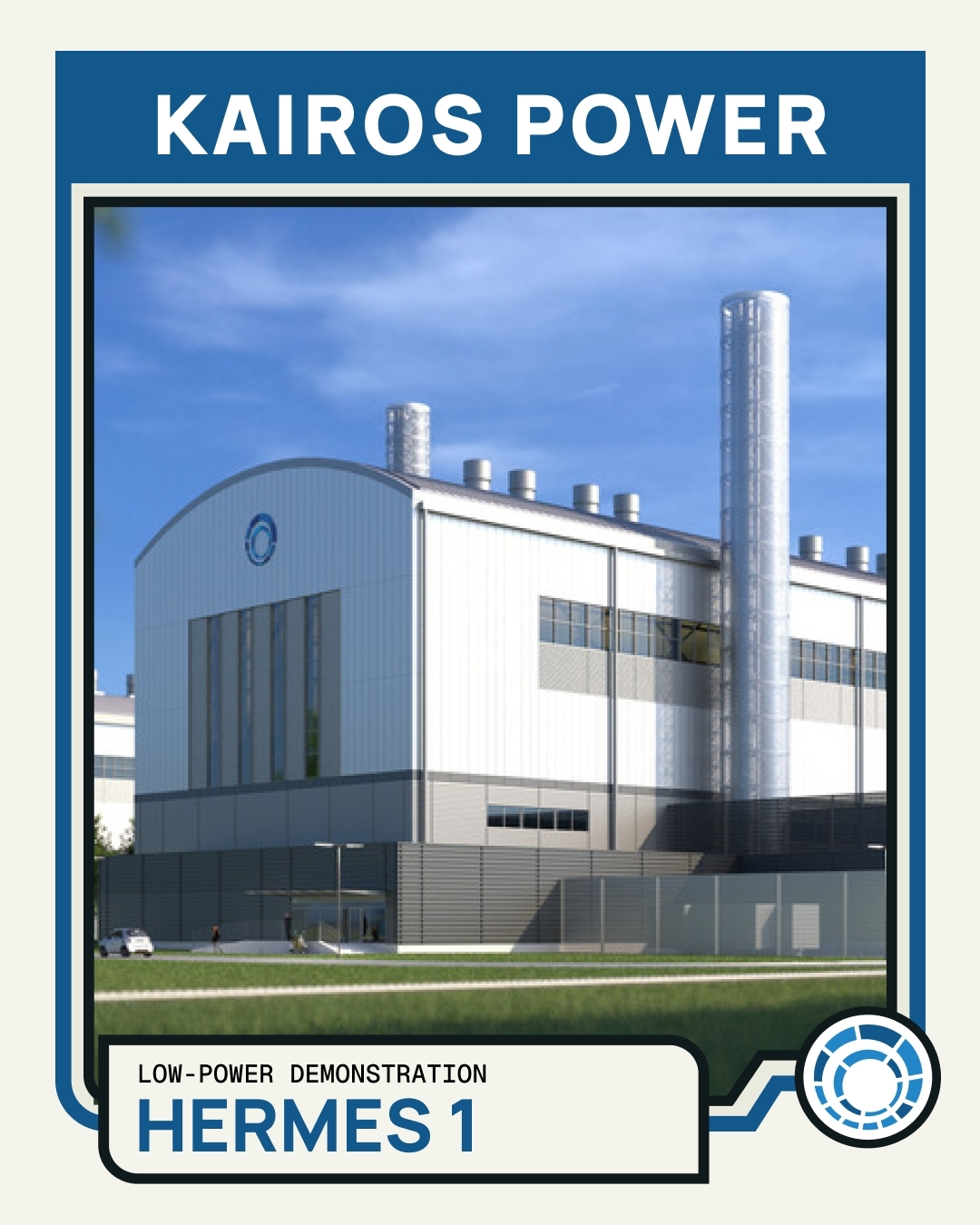
Hermes 1 is the first Gen IV reactor approved for construction by the U.S. Nuclear Regulatory Commission (NRC). We started nuclear construction in May 2025 at our Reactor Demonstration Campus in Oak Ridge, which is roughly 25 miles northwest of the Knoxville Smokies—the Double-A affiliate of the Chicago Cubs. We will modularly build Hermes 1 using equipment skids manufactured in Albuquerque and shipped to the site for assembly. Hermes 1 is our first nuclear-fueled reactor and will demonstrate our ability to produce affordable heat. It builds on the lessons learned from the ETU series and will inform the design, build, and operation of Hermes 2, our commercial-scale demonstration reactor. Hermes 1 could see action in 2028.
Triple-A: Hermes 2
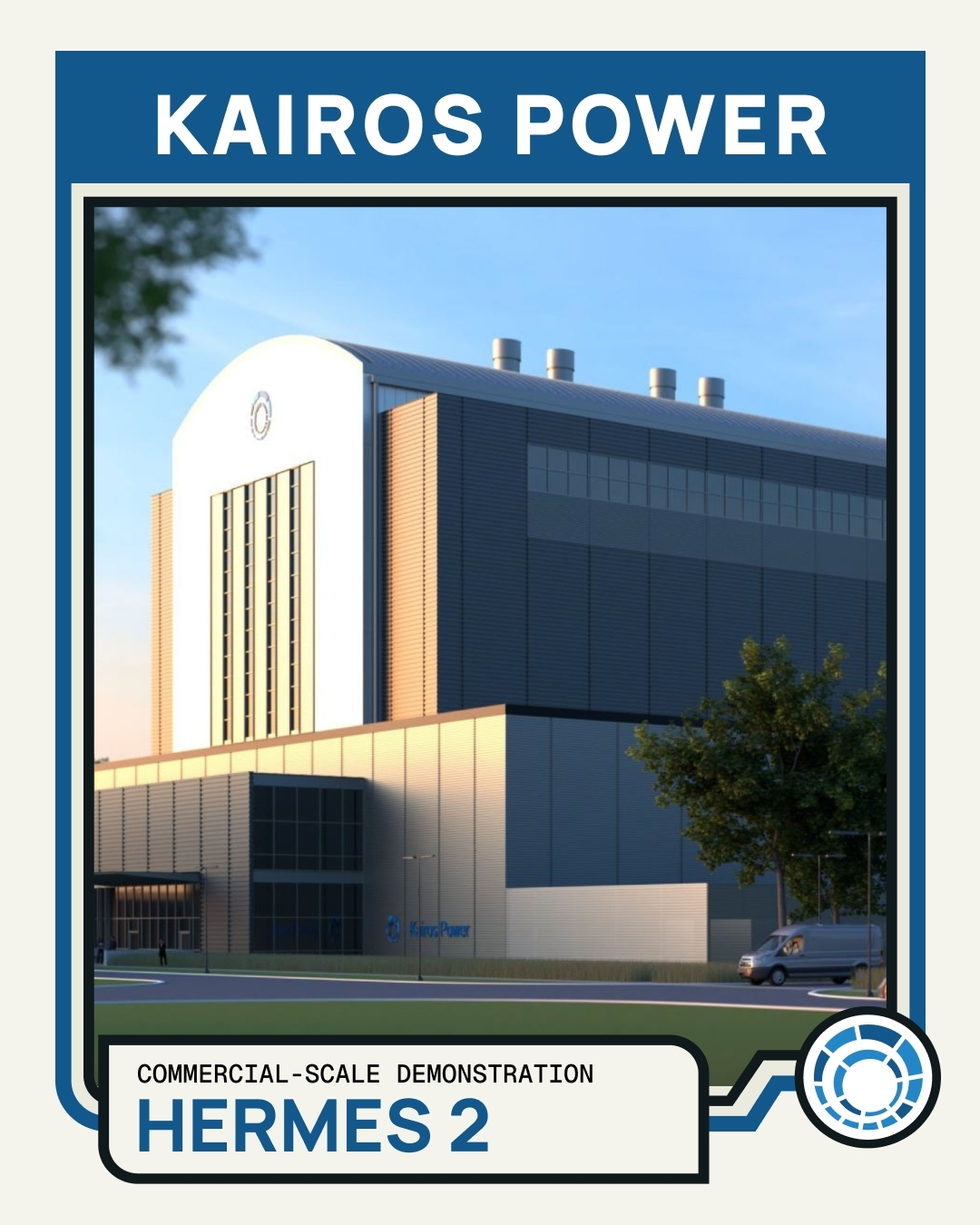
Hermes 2 is a 50-megawatt demonstration reactor that is on track to be one of the first commercial-scale advanced reactors to supply power to the U.S. grid. Its construction permit was issued by the NRC four months ahead of schedule, thanks to the licensing precedents established through Hermes 1. The plant will incorporate all of the lessons learned throughout our farm system to demonstrate complete plant architecture. Hermes 2 is expected to break ground this spring, enabling a credible pathway to establish cost certainty and the proficiency to build future plants on time and budget.
Closing Out the 9th
Great teams don’t gamble on unproven talent.
They develop it.
By embracing an iterative, “farm system” approach, Kairos Power is redefining how new nuclear technologies are brought to market—methodically, transparently, and with every lesson incorporated along the way.
Just like in Major League Baseball, the goal isn’t just to make it to opening day.
It’s to be ready when you get there.