Kairos Power Develops Automated Welding Solution to Fabricate Key Reactor Safety System


Highlights:
- Kairos Power developed a welding glovebox automation system to weld Reactivity Shutdown System absorber assemblies.
- The system integrates a Gas Tungsten Arc Welding set up inside of an inert glovebox with a robotic arm.
- Quality testing validated the reliability of the automated process that can be scaled for mass production.
- The project significantly reduces supply chain risk and delivers greater cost certainty in manufacturing critical reactor hardware components.
Kairos Power built a custom solution to automate the welding of a crucial reactor safety component.
All integration work for the innovative system was performed in-house to produce highly precise and repeatable welds in an oxygen-free environment — leading to significant capital savings and the opportunity to mass-produce other welded components at-scale for future Kairos Power projects.
The Challenge: High-Volume, High-Sensitivity Welding
The Kairos Power fluoride salt-cooled high-temperature reactor (KP-FHR) features a Reactivity Shutdown System (RSS) with rods that shut down the reactor when inserted into the core.
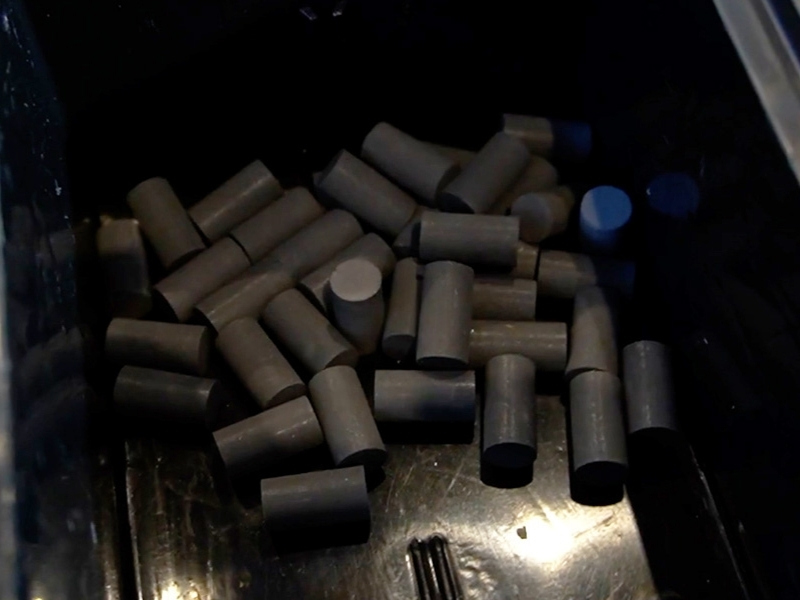
The rods contain neutron-absorbing pellets to stop a nuclear reaction.
The pellets are made of boron carbide material that cannot be exposed to oxygen or moisture and must be welded inside an inert environment to prevent contamination and preserve performance.
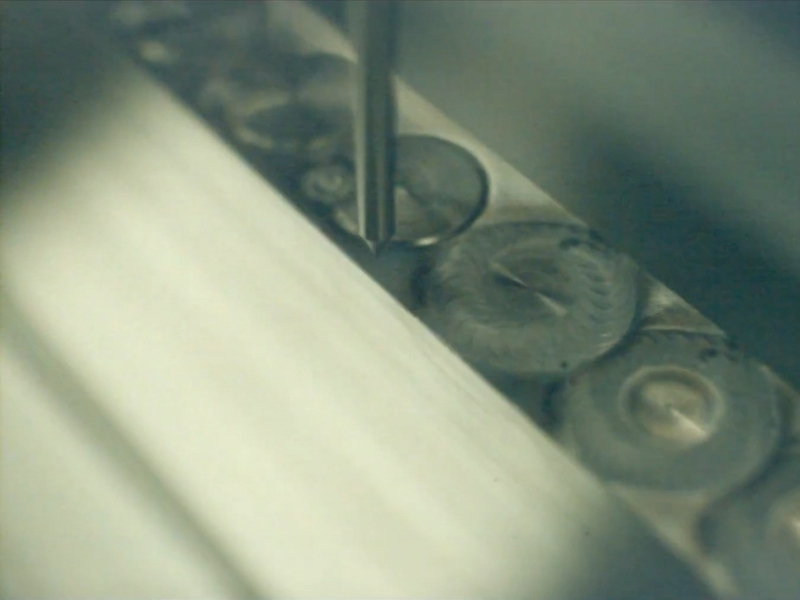
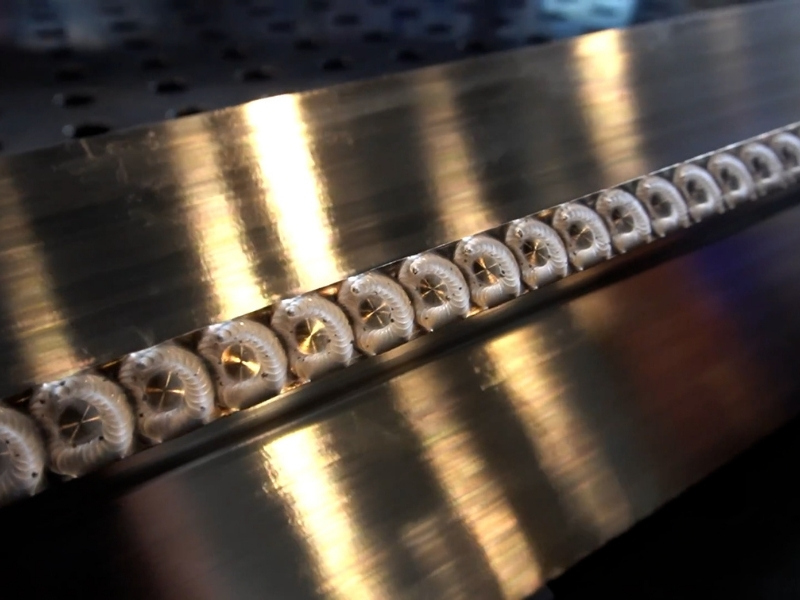
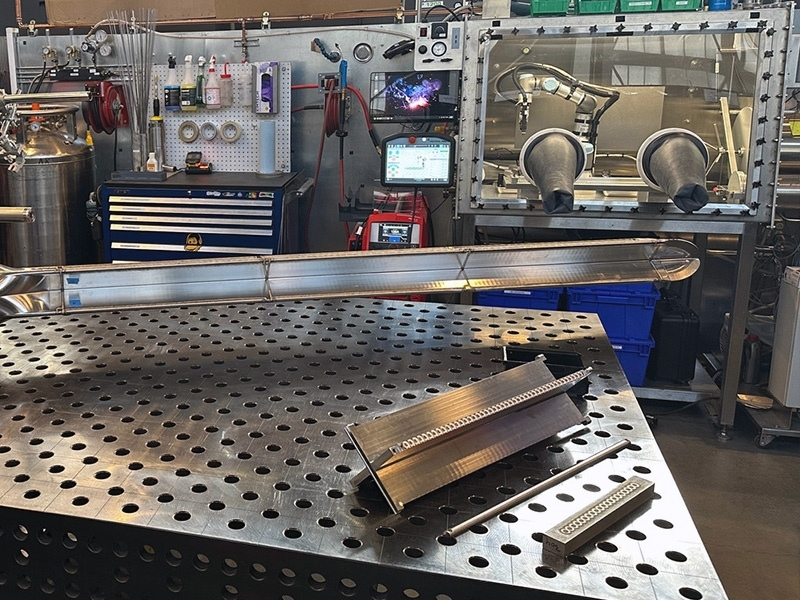
Each absorber has more than 500 individually welded caps that seal the pellets inside and could not be completed using available off-the-shelf solutions.
Performing the welds manually would have taken much longer to complete and introduced more variability in welding parameters such as heat input, arc length, and inconsistent technique due to operator fatigue.
An Automated Solution
The Kairos Power Manufacturing team spent three months developing a custom solution at company headquarters in Alameda, California.
This early-stage lab work plays a crucial role in developing manufacturing capabilities in-house by working through initial processes that can be later scaled for larger production.
The goal of this project was to ensure extremely high repeatability, consistency, and quality across the system and its processes.
The end result was an automated welding solution that integrates a Gas Tungsten Arc Welding setup inside of an inert glovebox with a robotic arm to enable high-quality welds inside a controlled, oxygen-free environment.
The team used the system to perform more than 2,000 production welds across four RSS absorber assemblies.
Complete automated processing time per cruciform was approximately 1.5 hours with more than 500 robotic welds.
Liquid penetrant testing to industry standards revealed zero indications — meaning each weld was consistent from the first to the last.
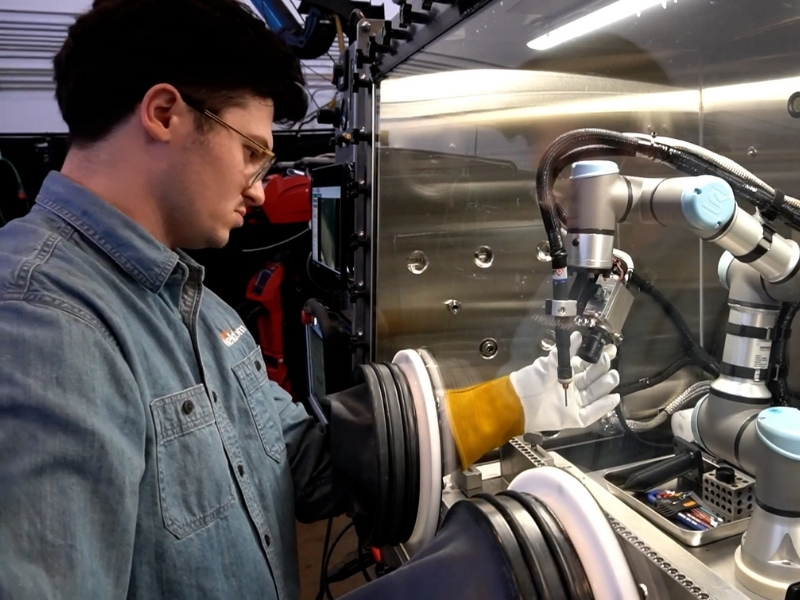
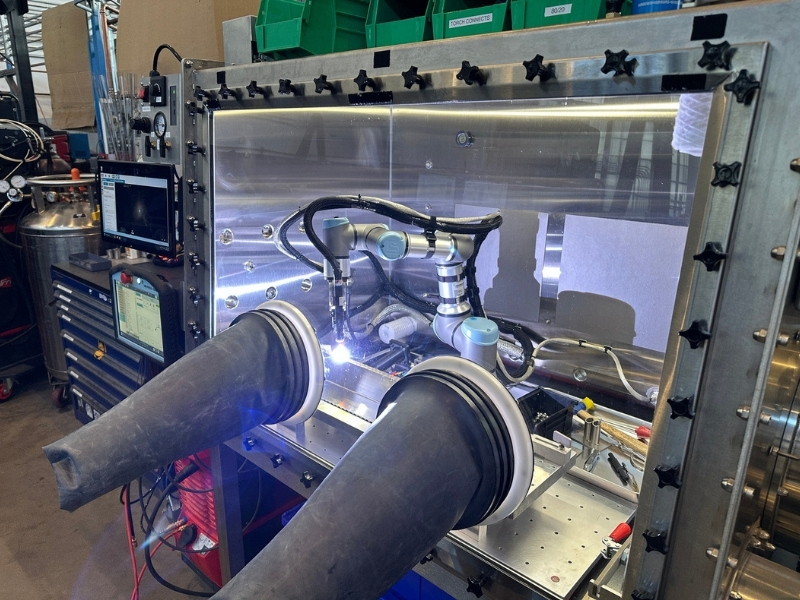
“Given the high volume of welds, the need for an inert environment, and how crucial it is to have a repeatable process on a safety critical component, automation just made sense,” said Damen Bircher, lead fabricator at Kairos Power, who spearheaded the project. “With no off-the-shelf system available, we developed and built our own welding platform in-house.”
“It’s not every day that you see a robotic welding arm inside a glovebox, and building this system in just a few months is a significant accomplishment for the Kairos Power team,” said Ed Blandford, Kairos Power chief technology officer and co-founder. “Not only did the team maintain rigorous quality standards over multiple design-build-test cycles, but the system cost significantly less to build than outsourcing the parts themselves. This is exemplary of how Kairos Power's iterative development approach and vertical integration strategy work together to achieve cost and schedule certainty.”
Strategic Significance
This project is Kairos Power’s first deployment of a robotic arm for welding.
Developing the welding solution in-house allowed Kairos Power to fully own the development of the system and reduced dependence on external suppliers.
Qualifying the weld process at lab-scale provided the baseline for executing at industrial-scale, starting with the Hermes reactor series.
Hermes 1 will contain four shutdown elements with roughly 2,100 more welds than the initial demonstration.
Hermes 2 will contain eight shutdown elements that are roughly twice as long (a total of 8,400 more welds).
Kairos Power's proof of concept of the system enables a continued path to refine and expand automated production of RSS assemblies and other high-sensitivity components at scale for Hermes and the future fleet.