
The Engineering Test Unit Program: Learning How to Build Kairos Power Reactors
Key Takeaways:
- Kairos Power is progressing through a series of large-scale, hardware demonstrations of its fluoride-salt-cooled high-temperature reactor technology.
- The Engineering Test Units help Kairos Power understand costs and reduce uncertainty for the Hermes reactor series and future commercial fleet.
- ETU 1 initiated a supply chain for raw materials and off-the-shelf components, stood up in-house manufacturing capabilities, and tested the design and integration of principal reactor systems.
- ETU 2 demonstrates a refined, fully modular system architecture and is helping to advance manufacturing and streamline operations.
- ETU 3 helped to de-risk Hermes civil construction and will serve as a hub for operator training and remote handling tests.
Why Engineering Test Units?
Kairos Power employs a rapid iterative development approach, enabled by vertical integration, to accelerate deployment of our commercial fluoride-salt-cooled, high-temperature reactor — the KP-FHR.
By building and demonstrating reactor systems many times over before we deliver our first commercial plant, we significantly reduce first-of-a-kind risk that has historically caused costly delays for nuclear projects.
The Engineering Test Unit (ETU) program puts this approach into practice through a series of reactor-scale, non-nuclear tests that emulate the size and operating conditions of the Hermes Low-Power Demonstration Reactor (Hermes 1).
This allows us to innovate quickly by testing and optimizing hardware in a less restrictive environment before introducing nuclear fuel into the reactor.
It also creates a learning pipeline that directly informs the Hermes reactor series and will carry forward to our future fleet. So, when we build our first full-size commercial plant, the systems and components inside it will have already progressed through five or more iterations on the way to nth-of-a-kind cost certainty.
The First Test Run: ETU 1
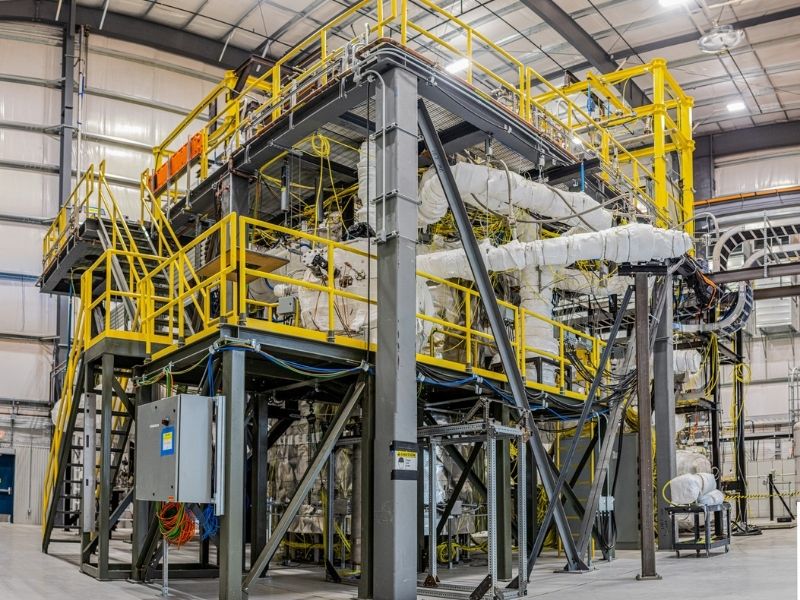
ETU 1 was commissioned in 2023. The unit ran for several months and gave operators experience with startup operations, salt handling, online refueling, and maintenance.
Located at our Manufacturing Development Campus in Albuquerque, New Mexico, ETU 1 was Kairos Power’s first fully integrated, reactor-scale test.
ETU 1 demonstrated the key building blocks of KP-FHR by serving as a proving ground for key systems, structures, and components, while developing the supply chain for specialized parts and materials.
Proving Core Technologies
ETU 1 validated the design and integration of major systems and components.
It helped us learn how to build, operate, and decommission reactor-scale hardware, and generated hundreds of lessons learned across the complete lifecycle.
Producing and handling molten salt coolant (known as “Flibe”) at industrial scale for the first time was a major achievement.
After producing 14 metric tons of Flibe at our Molten Salt Pilot Plant in Elmore, Ohio, we transported it cross-country and loaded it into ETU 1 safely at 600°Celsius.
ETU 1 was also the first test of fuel pebble performance and manufacturing, starting with surrogate graphite TRISO pebbles.
We prototyped and optimized the production process, then produced more than 30,000 graphite pebbles at our Pebble Development Lab in Albuquerque that would circulate through the system.


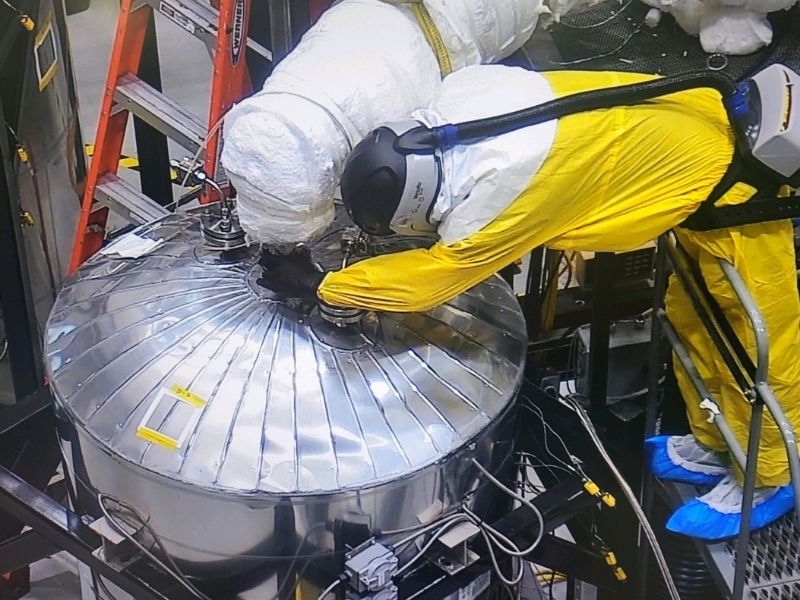

With ETU 1 assembled and fuel and salt loaded into the system, operations began.
Teams worked in shifts, monitoring the system 24/7 from control rooms in Albuquerque and Alameda, California.
Important achievements included:
- Successfully loading molten salt into the system, making it the largest Flibe test ever built
- Completing more than 2,000 hours of pumped salt operations
- Logging the highest Flibe flow rate ever recorded at 3,000 gallons per minute
- Demonstrating pebble handling and online refueling
- Cycling the reactivity control elements more than 25,000 times
Establishing a Supply Chain During COVID
Working through the disruptions of the COVID-19 pandemic, we stood up a 100,000-square-foot machine shop to produce graphite and steel components for ETU 1.
As the pandemic caused excessive lead times for specialized components, bringing manufacturing in-house was crucial for reducing our reliance on outside vendors to achieve greater control over costs and schedules.
By initiating the supply chain for raw materials and off-the-shelf components, and establishing production capabilities for specialized components, ETU 1 helped to mitigate supply chain risk for future iterations.
Following significant lessons learned, ETU 1 also prompted investments in new capabilities, including an in-house ASME-certified vessel shop and expanded graphite machining capabilities.

In 2024, we deactivated and decommissioned ETU 1 after a successful testing campaign, cleaning and releasing the enclosure with zero beryllium exposure to personnel.
With this operating experience under our belt, we were ready to improve on ETU 1 with a new iteration that more closely emulates our future reactors.
It was time to build ETU 2.
Piloting Modular Design in ETU 2
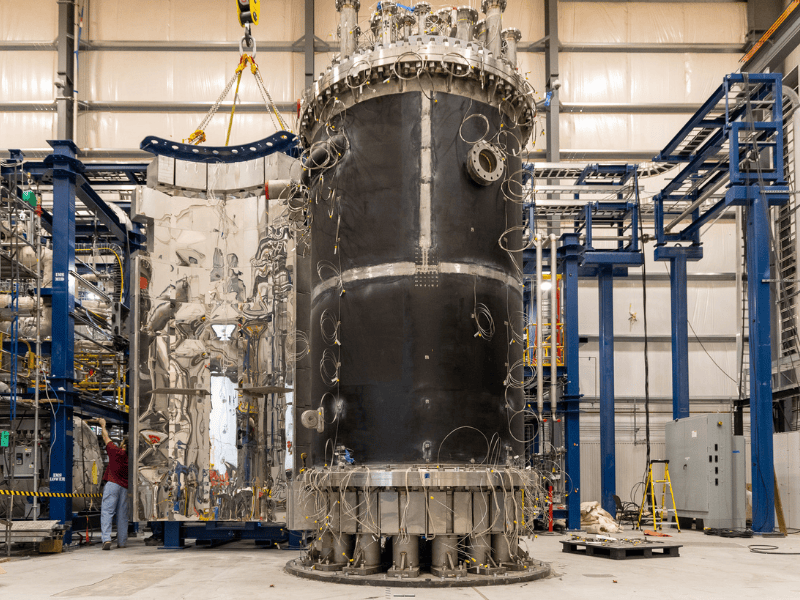
With refined architecture and an optimized, fully modular design, ETU 2 is highly representative of Hermes 1.
As we build it, we continue to advance our manufacturing capabilities, ramping production of ASME U-stamped pressure vessels and gaining proficiency with modular systems.
It’s all enabled by deep collaboration between Kairos Power’s in-house engineering, procurement, and manufacturing teams.
Why Modularity Matters

Kairos Power’s small modular reactors will be built in transportable sections or “modules” designed for rapid deployment.
Modular construction enables:
- Standardized designs that can be mass-produced
- Parallel fabrication and testing off-site
- Faster assembly, lower labor costs, and improved quality.
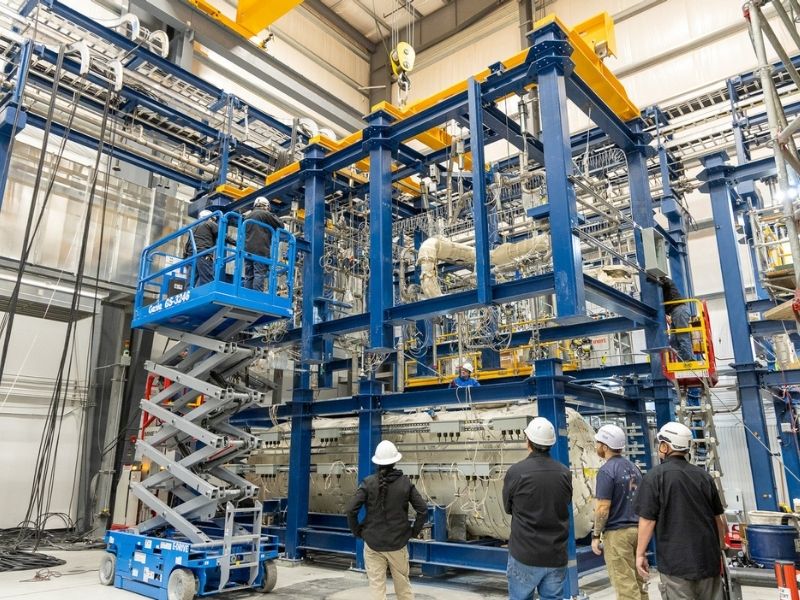
ETU 2 comprises more than 30 skid-mounted modules built and assembled in Kairos Power’s Modular Systems Facility in Albuquerque.
The end result will be a fully standardized design made up of plant equipment skids that can be prefabricated and transported by truck.
The experience we get streamlining design, integration, and assembly of ETU 2 directly informs how we will build the Hermes reactor modules, which will be fabricated in Albuquerque and shipped to Oak Ridge, Tennessee, for assembly.
Advancing In-House Manufacturing
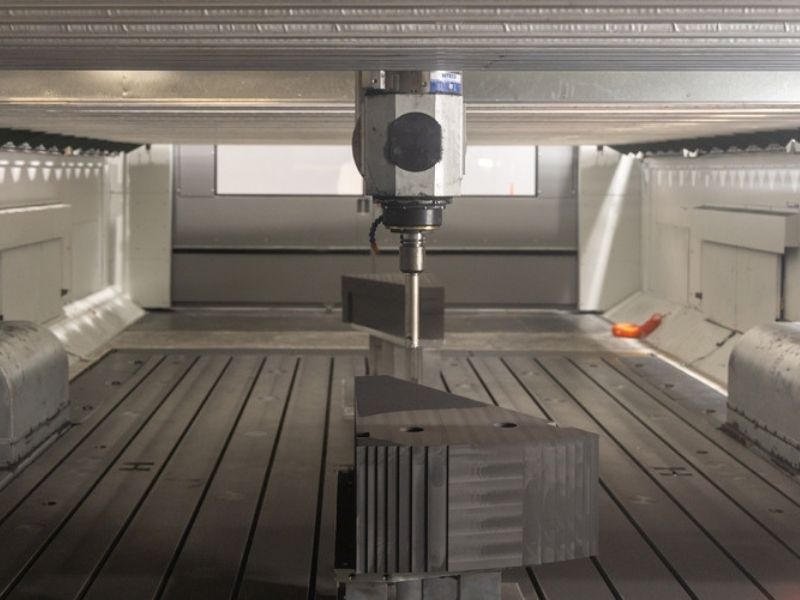
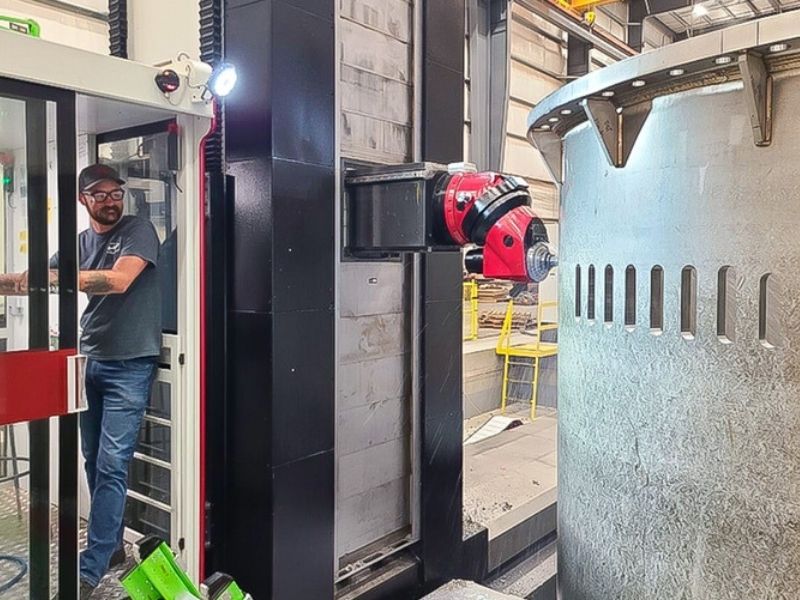
Much of the ETU 2 reactor infrastructure has progressed in complexity since piloting key systems and components in ETU 1.
Some manufacturing advancements include:
- Fabricating our first internally-produced reactor vessel – and the first vessel to earn an ASME U2-stamp at our Manufacturing Development Campus.
- Fabricating and assembling the vessel’s graphite reflector in-house, with significant design improvements to reduce the number of blocks and match-machining to ensure they conform perfectly to the inner dimensions of the vessel.
- Increasing in-house manufacturing of components for systems like the Primary Salt Pump, the Chemistry Control System, and the PebbleHandling and Storage System.

Preparing for Operations
ETU 2 will closely emulate the Hermes 1 design, so many of the startup and operating procedures will be nearly identical.
This requires a more sophisticated operator training program than ETU 1, where employees moonlighted as operators.
Our team is developing 50+ new procedures for our full-time staff hired to run ETU 2, with safety remaining the top priority.
The experience and data we get from ETU 2 will directly inform Hermes and future deployments.
ETU 3 is the final stepping stone from non-nuclear to nuclear hardware demonstration.
Filling in the Gaps with ETU 3

ETU 3 serves as a platform to hone remote maintenance capabilities, operator training, advanced manufacturing, and construction techniques.
It also takes the final steps in confirming how the safety-related equipment will be arranged around the Hermes reactor in a maintainable configuration.
Remote Handling and Maintenance
Kairos Power is designing and testing remote handling systems that use robotic equipment to maintain and replace reactor systems and components.
Remote handling is crucial for minimizing personnel entry into the reactor enclosure and reducing system downtime.
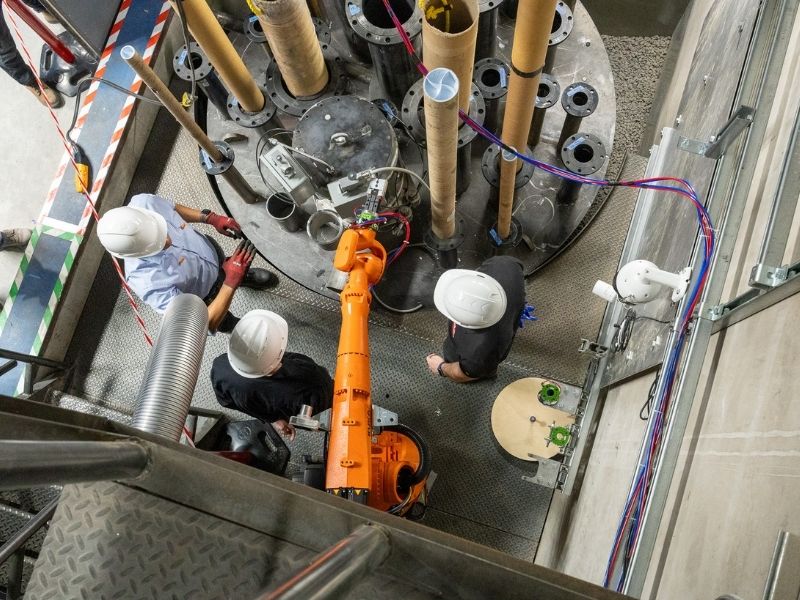
We are testing early iterations of these tools in a dedicated space at our Albuquerque campus, engineering a flexible, six-axis robotic system to imitate a human operator.
Building on these lessons, ETU 3 will be a full-scale demonstration of the remote handling capabilities to be implemented in Hermes 1.
Civil Construction
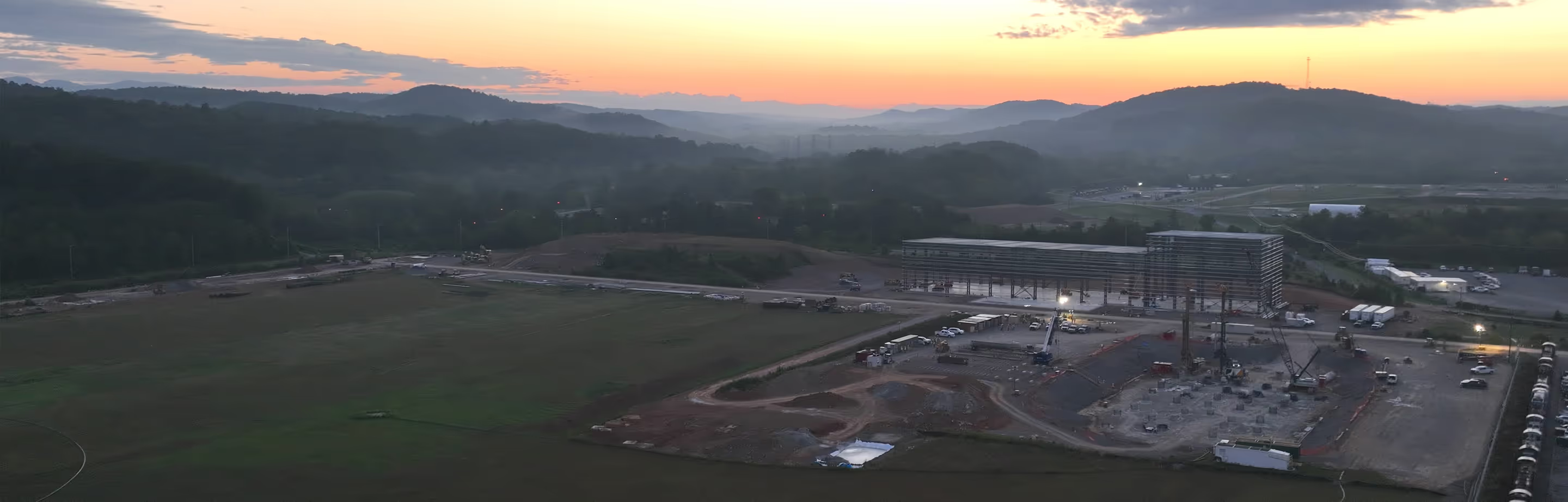
ETU 3 is under construction at our campus in Oak Ridge, Tennessee.
Since ETU 3 and Hermes are co-located, they share the same geological conditions and contracting partners.
Kairos Power worked with Barnard Construction to build the ETU 3 civil structure.
The facility’s drilled pier foundation provided a unique opportunity to test the installation process, refine our quality control practices, and gain construction proficiency before starting on the nuclear-safety-related drilled piers for Hermes 1.
Exploring Advanced Manufacturing

One of the benefits of the ETU program is the ability to test new manufacturing methods before scaling up production.
In partnership with Cambridge Vacuum Engineering (CVE) and the University of Sheffield AMRC, Kairos Power fabricated the ETU 3 reactor vessel using cutting-edge electron beam welding (EBW) technology.
EBW offers significant time savings and greater consistency than conventional arc welding, and could lead to significant cost savings for the fleet.
ETU 3 is expected to complete construction in the Summer of 2026.
More Than Prototypes
The ETU program is central to Kairos Power’s strategy to redefine nuclear hardware delivery.
With each iteration, we strengthen supply chains, increase manufacturing and construction proficiency, streamline operations, and reduce uncertainty across all aspects of our technology.
Thanks to the ETUs, we know how to build large-scale reactor systems.
We know how to operate them.
And, we’re on our way to building the future fleet of KP-FHRs with greater cost-certainty.