How Kairos Power is Putting “Modular” into its Small Modular Reactors
Key Highlights
- Modular designs can help improve construction and functional readiness for future nuclear power plants.
- Kairos Power is using its Engineering Test Units (ETUs) to gain practical experience designing, fabricating, installing, and integrating reactor equipment modules.
- Lessons from the ETU series are informing the modular construction approach for Hermes 2 and Kairos Power’s commercial reactors.
Small modular reactors (or SMRs) are gaining attention because they offer a different approach to building nuclear power plants.
Historically, commercial nuclear projects with bespoke, one-of-a-kind designs have experienced prolonged construction timelines.
Although some large conventional reactor projects have used modular construction for certain parts of the plant, Kairos Power’s SMRs will extend that approach across the entire architecture, using a standardized design that improves construction predictability while creating opportunities to reduce cost and schedule risk over time.
Why Modularity Matters
- Factory fabrication: Skids can be assembled and tested in a controlled, factory setting before being shipped to the project site for installation, integration, and commissioning. This moves more work into manufacturing facilities to improve quality control and reduce the amount of complex fieldwork required during construction.
- Parallel execution: Multiple systems can be manufactured, checked out, and installed at the same time, reducing construction bottlenecks and improving schedule flexibility.
- Standardized construction: Instead of building a custom structure each time, teams can assemble standardized modules into a consistent plant design.
But deploying a scalable and repeatable SMR product isn’t simple.
It requires substantial upfront learning to gain experience designing, building, installing, and integrating reactor-scale modules before deploying a commercial fleet.
Enter Engineering Test Unit 2 (ETU 2): Kairos Power’s first fully integrated modular hardware system.
ETU 2 as a Modular Pilot
ETU 2 is the second of three large-scale, non-nuclear hardware demonstrations that inform the Hermes demonstration reactor series and Kairos Power’s future commercial reactors.
ETU 2 builds on lessons from ETU 1, Kairos Power’s first full-scale, integrated hardware test.
Although ETU 1 was not a modular design, it demonstrated how reactor systems work together and strengthened our understanding of integrated plant architecture.
ETU 2 builds on that understanding and applies that experience to a modular design.
The project phases included:
- Planning and Predesign: Apply lessons learned from ETU 1 and establish modularity objectives for ETU 2 that could also support future deployment.
- Maturing Plant Design: Arrange similar functions and equipment into discrete modules that could be designed, manufactured, assembled, tested, shipped, and integrated. Standardize materials and specifications to enable earlier procurement to decouple the final designs from the procurement phase.
- Test: Build and test structural and process equipment demonstrations early to incorporate lessons learned and improve the final designs before production.
- Manufacture and Assemble: Release design packages progressively so procurement, manufacturing, module assembly and testing can move in parallel.
- Module Installation and Integration: Bring the individual modules together and connect them into a complete, functioning ETU 2 system (currently underway).
Each first-of-a-kind activity gives us an opportunity to identify constraints, apply lessons to subsequent work, and build greater confidence in future designs and deployment processes.

Designing ETU 2
ETU 2 comprises more than 30 individual “skids.” Each skid supports a defined system or function and contains equipment, piping, supports, electrical cables, and interfaces. The skids are designed for transport by truck or rail to inform future reactor modules that will be built in a factory and shipped to the site for installation.
The design team grouped system components into modules based on their primary functions, with each module arranged on one or more skids.
The space constraints of our ETU 2 enclosure drove the need to package more equipment, piping, and hardware into each module. This approach helped maximize free space around each module to support mobility during construction, integration, and operations.
Designing for modular construction required close collaboration across teams.
Design engineers worked closely with the Manufacturing team to ensure components could be made using existing equipment. They also conducted design reviews early in the process to confirm that the components could be assembled into the steel skid frames.
“How you approach modular system design also impacts how you organize the team, and how you execute the project,” said Cameron Whalen, manager of Kairos Power’s Engineering Integration team. “It can have an outsized impact on how well the system functions at the end of the day.”
Lessons from ETU 1 helped our team understand how systems could be grouped into self-contained modules for ETU 2, even as the overall system incorporated more components.
For example, chemistry monitoring and control functions were distributed across multiple systems in ETU 1. That experience helped determine how to consolidate those functions into a dedicated chemistry control system (CCS) skid and tank for ETU 2.
The team then conducted an extensive water testing campaign to validate the CCS as an integrated modular subsystem.

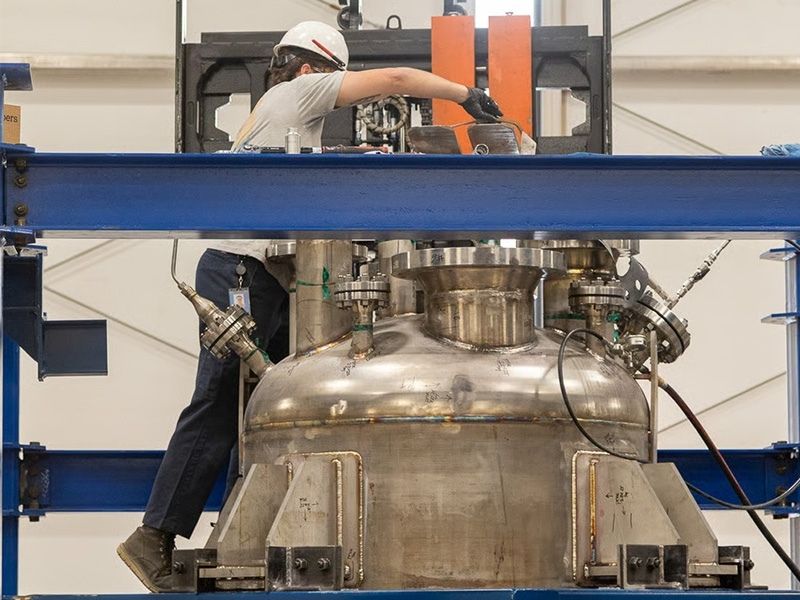
Another example of this evolution is the Inventory Management System (IMS), which manages molten salt transfer in and out of the reactor system. For ETU 2, the team added Flibe recirculation—a capability not included in ETU 1—along with new equipment to support that function, including a Centrifugal Auxiliary Pump mounted on the IMS tank.
Manufacturing the Skids
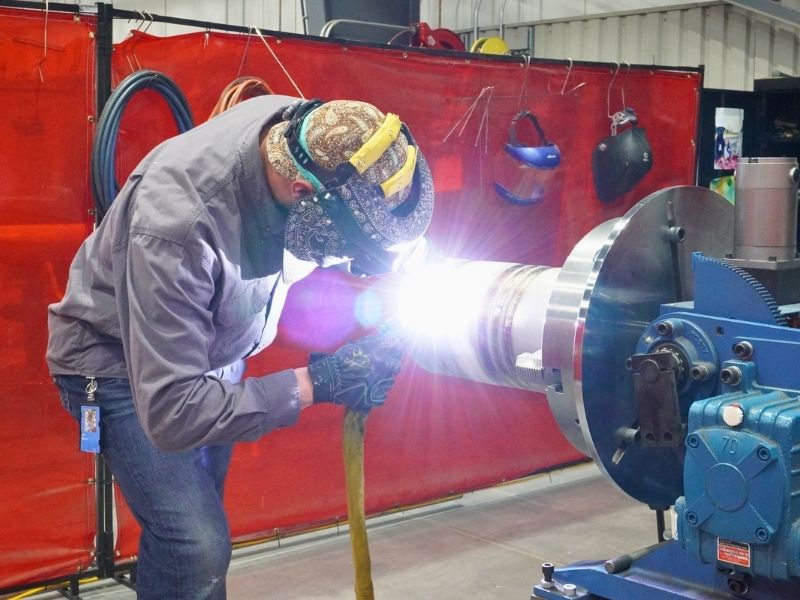
ETU 2 is giving Kairos Power hands-on experience developing repeatable fabrication methods and building the capabilities needed to produce modular systems in-house at our Manufacturing Development Campus in Albuquerque, New Mexico.
The majority of components for ETU 2 were made in-house, including the most challenging systems, such as the primary salt pump, reactor shutdown safety system, and the ASME U-stamped reactor vessel.
During manufacturing, the Quality Control team worked closely with the Manufacturing team to ensure that each component matched the design drawings. This precision is especially important for a modular system, where even small deviations can affect how skids align and connect during integration.
The Pre-Commission, Install, Test, and Assemble (PITA) team worked across multiple skids simultaneously rather than completing one skid from start to finish before moving to the next. They installed components, heaters and instruments, and insulated skid piping in parallel before moving them into the enclosure.
This approach helped maintain fabrication progress: if the team hit a constraint on one skid, they could shift work to a different skid to progress while the issue was resolved.
“The parallel progress that we have seen with modular skid fabrication is eye-opening compared to the ETU 1 build process,” said JoshChristian, Senior Manager, Manufacturing (PITA). “The ability to parallelize the fabrication effort and move our working teams from one skid to another efficiently has been a good success and provides valuable lessons for Kairos Power.”
After fabrication, teams tested each skid before combining them into modules and moving them into the ETU 2 enclosure for integration—the next opportunity to test how our modular approach performs in practice.

Putting it all Together: The Challenge of Integration
Manufacturing parts and fitting them into a defined space is just one challenge of modular design.
The next step is bringing the modules together to ensure that they work as an integrated whole.
Kairos Power’s engineering, integration, procurement, manufacturing, and operations teams are working closely to turn ETU 2’s modular design into real-world functionality.
Before installing ETU 2 skids in the enclosure, teams performed quality-control checks, established reference points, and used laser mapping of the ETU 2 space to plan module alignment.
As the team installed skids in the enclosure, they gained experience by developing installation sequences that maintained access to connection points needed for welding and electrical work.
Once skids were in place, the only remaining step was connecting the piping and electrical connections in between them. This sequence enabled quicker assembly than in ETU 1, for which piping routing had to be done in the sequence of the stick build.

Once a skid was in place and piping and electrical connections were completed, teams began testing individual systems, including heaters, controller connections, and human-machine interfaces.
The next step after the PITA and Operations teams wrap up component-level testing will be to perform broader integration testing to evaluate how all the pieces interact with one another; this includes turning valves, running inert argon gas through the system, and checking temperatures and pressures to make sure equipment is running before heating the system.
Next Steps
ETU 2 is helping Kairos Power evaluate not only our reactor technology, but also how we design, manufacture, assemble, and integrate modular systems for future fleet deployment.
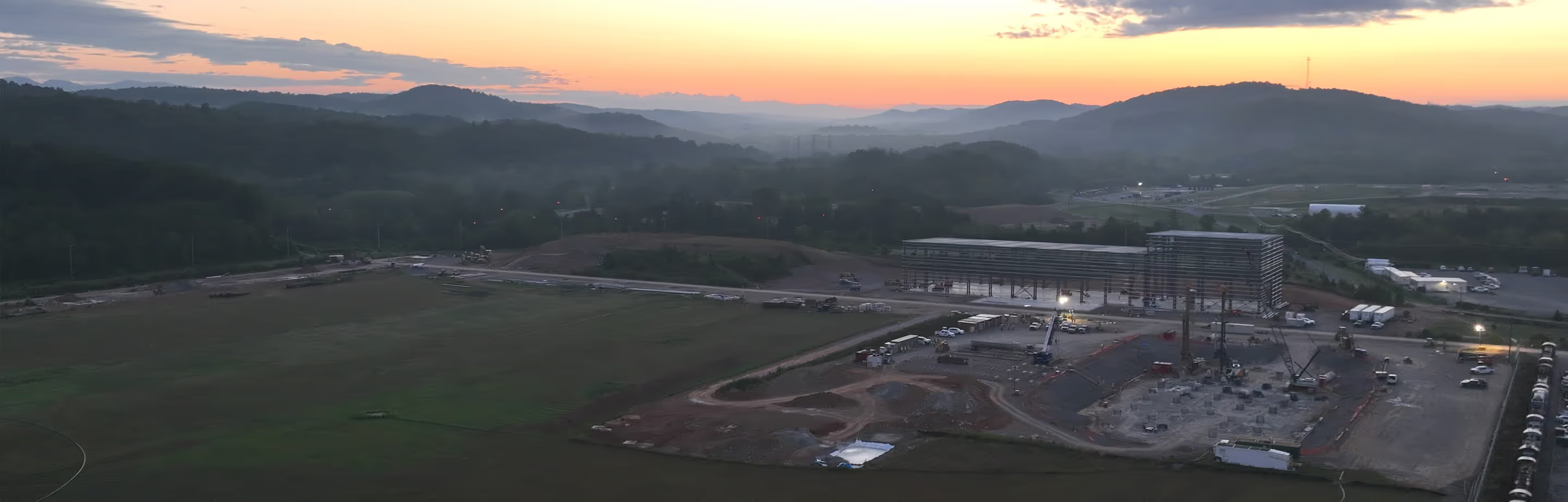
Experience from ETU 2 will inform the Hermes 2 reactor, which will be built using skids fabricated in Albuquerque and shipped to Oak Ridge for installation.
Once we complete ETU 2 integration and pre-commissioning work, the team will commence hot argon testing, elevating system temperatures to evaluate equipment and systems under more representative operating conditions.
By learning early in the development process with ETU 2, Kairos Power is reducing uncertainty and building a foundation to capture the cost and schedule benefits of modularity for our future fleet.